

Diagnostic Test
Before going to start preparation of your exam, it is recommended to attempt this simple diagnostic test. The result of this diagnostic test will provide me proper assessment where you stand now. After completing all questions, click on Get Result button that will appear at end of the exam. Plz take screenshot of the result screen at the end of the test and email me at: info@earnestprep.com
Your score will be kept confidential and will help me to guide each of you according to your level so I can help you to enhance your skill. During exam, if you need to move to next question or need to go back to previous question, plz click on forward or backward arrow signs as shown below in red circles:

Important Note: Please attempt this diagnostic test without calculator.
Ready to start diagnostic test? Click on Start button now:
Diagnostic
Congratulations - you have completed Diagnostic.
You scored %%SCORE%% out of %%TOTAL%%.
Our Feedback: %%RATING%%
Question 1 |
If an integer is multiplied by half of itself, the result is how much times the square of that integer?
A | 0.2 |
B | 0.5 |
C | 0.75 |
D | 1.2 |
E | 1.5 |
Question 2 |
40 is what percent less than 400?
A | 10% |
B | 40% |
C | 60% |
D | 90% |
E | 100% |
Question 3 |
If one-third of an integer is divided by two-fifth of that integer, the result will be how much times that integer?
A | 3/5 |
B | 4/5 |
C | 2/3 |
D | 5/6 |
E | 1 |
Question 4 |
Simplify the following expression:
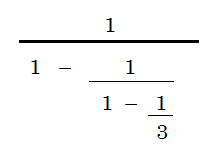
A | – 3 |
B | – 2 |
C | – 1 |
D | 0 |
E | 3 |
Question 5 |
Simplify the follow: 5 - (4 - (3 - (2 - 6) + 6) + 3) - 1 = ?
A | 6 |
B | - 7 |
C | 8 |
D | - 9 |
E | 10 |
Question 6 |
9⁄2 + 2⁄9
A | 1 |
B | 18/85 |
C | 29/85 |
D | 85/29 |
E | 85/18 |
Question 7 |
Price of 2 burgers and 2 sandwiches is $18 in total. If the price of 1 burger and 4 sandwiches is also $18 in total, what is the price of a sandwich?
A | $1.5 |
B | $3 |
C | $3.5 |
D | $5 |
E | $7.5 |
Question 8 |
If y = 5, then √16 - 8y + y2 =
A | -2 |
B | 0 |
C | 1 |
D | 3 |
E | 4 |
Question 9 |
Simplify the following:
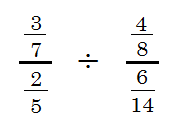
A | 12/31 |
B | 15/31 |
C | 45/49 |
D | 60/49 |
E | 2/7 |
Question 10 |
Which of the following fraction is greater than 3⁄4? (Do without calculator)
A | 2/3 |
B | 5/8 |
C | 4/5 |
D | 6/9 |
E | 7/10 |
Question 11 |
Find average of x and y:
If,
3x + 8 = 29, and 5y - 13 = 42
A | 7 |
B | 9 |
C | 12 |
D | 14 |
E | Cannot be determined |
Question 12 |
A trip takes 5 hours in a car moving 40 mph. How long would the trip take in a train moving at 100 mph?
A | 1 |
B | 1.5 |
C | 2 |
D | 2.5 |
E | 3 |
Question 13 |
Simplify the following expression:
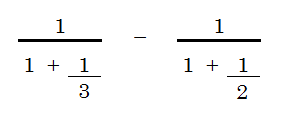
A | 1/15 |
B | 1/12 |
C | 1/3 |
D | 1/2 |
E | 1 |
Question 14 |
Simplify the following expression:
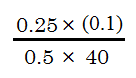
A | 1/20 |
B | 1/200 |
C | 1/80 |
D | 1/800 |
E | 1/2000 |
Question 15 |
In the table below, how many green marbles available in jar R?
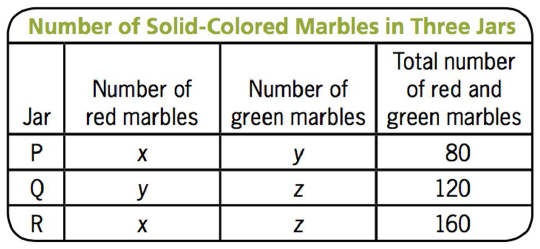
A | 60 |
B | 80 |
C | 100 |
D | 120 |
E | 140 |
Question 16 |
Recent technological advances in manned undersea vehicles have overcome some of the limitations of divers and diving equipment. Without vehicles, divers often become sluggish and their mental concentration was limited. Because of undersea pressure that affected their speech organs, communication among divers was difficult or impossible. But today, most oceanographers make observations by the means of instruments that are lowered into the ocean or from samples taken from the water direct observations of the ocean floor are made not only by divers of more than seven miles and cruise at the depth of fifteen thousand feet. Radio equipment buoys can be operated by remote control in order to transmit information back to land based laboratories, including data about water temperature, current and weather. Some of mankind’s most serous problems, especially those concerning energy and food, may be solved with the help of observations made by these undersea vehicles.
With what topic is the passage primary concerned?
A | Recent technological advances |
B | Communication among divers |
C | Direct observation of the ocean floor |
D | Undersea vehicles |
E | Latest ideas |
Question 17 |
Gases emitted by motor vehicles are harmful to humans. The more such gases are inhaled, the more damage is done to one's respiratory system. When exercising, larger volumes of air pass through the respiratory system.
Which of the following conclusions is most strongly supported by the information above??
A | When exercising near motor vehicles, one should keep the amount of air inhaled to a minimum. |
B | Outdoor exercise in an urban area should not be performed during peak hour traffic. |
C | Damages caused to the respiratory system are almost impossible to repair. |
D | In the near future, emission-free vehicles will be created to prevent air pollution. |
E | Vehicles are harmful to humankind. |
Question 18 |
A popular theory explaining the evolution of the universe is known as the Big Bang Model. According to the model at some time between twenty billion years ago, all present matter and energy were compressed into a small ball only a few kilometers in diameter. It was, in effect, an atom that contained in the form of pure energy all of the components of the entire universe. Then, at a moment in time that astronomers refer to as T = 0, the ball exploded, hurling the energy into space. Expansion occurred. As the energy cooled most of it became matter in the form of protons, neutrons and electrons. These original particles combined to form hydrogen and helium and continued to expand. Matter formed into galaxies with stars and planets.
Which sentence best summarizes this passage?
A | The big band theory does not account for the evolution of the universe |
B | According to the Big Bang Model, an explosion caused the formation of the universe |
C | The universe is made of hydrogen and helium |
D | The universe is more than ten billion years old |
E | The universe is born rather than has self-existence |
Question 19 |
Every Sunday, Maria eat pizza in lunch and watch movie at night.
If the above statement is true, which of the following statement or statements MUST be true?
I. If Maria eat pizza in lunch and watch movie at night, then it's Sunday.
II. If it's not Sunday, then Maria neither eat pizza in lunch nor watch movie at night.
III. If Maria eat pizza in lunch, but don't watch movie at night, then it's not Sunday.
A | I Only |
B | II Only |
C | III Only |
D | I & II Only |
E | II & III Only |
Question 20 |
If Sana was born on October 1990, she would have been older than her fiance Bilal.
In fact Sana was born on November 1990.
Which of the following statement MUST be true?
A | Sana is not younger than Bilal. |
B | Sana is still younger than Bilal. |
C | Sana and Bilal have same age at present. |
D | Bilal is younger than Sana. |
E | We cannot conclude from the given information. |
Question 21 |
Carla and Joel took five courses together but achieved the same grade in only one of the courses — history. Each course was graded on scale ranging from 60 to 100.
Which of the following statements allows one to determine whether the average of the grades Carla achieved in the five courses was higher than the average of the grades Joel achieved in those courses?
A | Carla's lowest grade was in history, but Joel's lowest grade was in math. |
B | Joel's highest grade was higher than Carla's highest grade. |
C | Carla achieved higher grades than Joel in three courses. |
D | Carla's lowest grade and Joel's highest grade were the same. |
E | Joel's lowest grade and Carla's highest grade were for the same course. |
Question 22 |
We are profoundly ignorant about the origins of language and have to content ourselves with more or less plausible speculations. We do not even know for certain when language arose, but it seems likely that it goes back to the earliest history of man, perhaps half a million years. We have no direct evidence, but it seems probable that speech arose at the same time as tool making and the earliest forms of specifically human cooperation. In the great Ice Ages of the Pleistocene period, our earliest human ancestors established the Old Stone Age culture; they made flint tools and later tools of bone, ivory, and antler; they made fire and cooked their food; they hunted big game, often by methods that called for considerable cooperation and coordination. As their material culture gradually improved, they became artists and made carvings and engravings on bones and pebbles, and wonderful paintings of animals on the walls of caves. It is difficult to believe that the makers of these Paleolithic cultures lacked the power of speech. It is a long step Admittedly, from the earliest flint weapons to the splendid art of the late Old Stone Age: the first crude flints date back perhaps to 500,000 B.C., while the finest achievements of Old Stone Age man are later than 100,000 B.C.; and, in this period, we can envisage a corresponding development of language, from the most primitive and limited language of the earliest human groups to a fully developed language in the flowering time of Old Stone Age culture.
How did language arise in the first place? There are many theories about this, based on various types of indirect evidence, such as the language of children, the language of primitive societies, the kinds of changes that have taken place in languages in the course of recorded history, the behavior of higher animals like chimpanzees, and the behavior of people suffering from speech defects. These types of evidence may provide us with useful pointers, but they all suffer from limitations, and must be treated with caution. When we consider the language of children, we have to remember that their situations are quite different from that of our earliest human ancestors, because the child is growing up in an environment where there is already a fully developed language, and is surrounded by adults who use that language and are teaching it to him. For example, it has been shown that the earliest words used by children are mainly the names of things and people (“Doll,” “Spoon,” “Mummy”): but, this does not prove that the earliest words of primitive man were also the names of things and people. When the child learns the name of an object, he may then use it to express his wishes or demands: “Doll!: often means “Give me my doll!” Or “I’ve dropped my doll: pick it up for me!”; the child is using language to get things done, and it is almost an accident of adult teaching that the words used to formulate the child’s demands are mainly nouns, instead of words like “Bring!”’ “Pick up!”; and so on.
The main idea of this passage is?
A | to provide evidence of the origin of language. |
B | to present the need for language. |
C | to discuss how early man communicated. |
D | to present the culture of early man. |
E | to narrate the story of English. |
Question 23 |
We are profoundly ignorant about the origins of language and have to content ourselves with more or less plausible speculations. We do not even know for certain when language arose, but it seems likely that it goes back to the earliest history of man, perhaps half a million years. We have no direct evidence, but it seems probable that speech arose at the same time as tool making and the earliest forms of specifically human cooperation. In the great Ice Ages of the Pleistocene period, our earliest human ancestors established the Old Stone Age culture; they made flint tools and later tools of bone, ivory, and antler; they made fire and cooked their food; they hunted big game, often by methods that called for considerable cooperation and coordination. As their material culture gradually improved, they became artists and made carvings and engravings on bones and pebbles, and wonderful paintings of animals on the walls of caves. It is difficult to believe that the makers of these Paleolithic cultures lacked the power of speech. It is a long step Admittedly, from the earliest flint weapons to the splendid art of the late Old Stone Age: the first crude flints date back perhaps to 500,000 B.C., while the finest achievements of Old Stone Age man are later than 100,000 B.C.; and, in this period, we can envisage a corresponding development of language, from the most primitive and limited language of the earliest human groups to a fully developed language in the flowering time of Old Stone Age culture.
How did language arise in the first place? There are many theories about this, based on various types of indirect evidence, such as the language of children, the language of primitive societies, the kinds of changes that have taken place in languages in the course of recorded history, the behavior of higher animals like chimpanzees, and the behavior of people suffering from speech defects. These types of evidence may provide us with useful pointers, but they all suffer from limitations, and must be treated with caution. When we consider the language of children, we have to remember that their situations are quite different from that of our earliest human ancestors, because the child is growing up in an environment where there is already a fully developed language, and is surrounded by adults who use that language and are teaching it to him. For example, it has been shown that the earliest words used by children are mainly the names of things and people (“Doll,” “Spoon,” “Mummy”): but, this does not prove that the earliest words of primitive man were also the names of things and people. When the child learns the name of an object, he may then use it to express his wishes or demands: “Doll!: often means “Give me my doll!” Or “I’ve dropped my doll: pick it up for me!”; the child is using language to get things done, and it is almost an accident of adult teaching that the words used to formulate the child’s demands are mainly nouns, instead of words like “Bring!”’ “Pick up!”; and so on.
Theories of the origin of language include all of the following EXCEPT?
A | Changes occurring through the years. |
B | The need to communicate. |
C | Language of children. |
D | The first man’s extensive vocabulary. |
E | Communication among primitive men. |
Question 24 |
We are profoundly ignorant about the origins of language and have to content ourselves with more or less plausible speculations. We do not even know for certain when language arose, but it seems likely that it goes back to the earliest history of man, perhaps half a million years. We have no direct evidence, but it seems probable that speech arose at the same time as tool making and the earliest forms of specifically human cooperation. In the great Ice Ages of the Pleistocene period, our earliest human ancestors established the Old Stone Age culture; they made flint tools and later tools of bone, ivory, and antler; they made fire and cooked their food; they hunted big game, often by methods that called for considerable cooperation and coordination. As their material culture gradually improved, they became artists and made carvings and engravings on bones and pebbles, and wonderful paintings of animals on the walls of caves. It is difficult to believe that the makers of these Paleolithic cultures lacked the power of speech. It is a long step Admittedly, from the earliest flint weapons to the splendid art of the late Old Stone Age: the first crude flints date back perhaps to 500,000 B.C., while the finest achievements of Old Stone Age man are later than 100,000 B.C.; and, in this period, we can envisage a corresponding development of language, from the most primitive and limited language of the earliest human groups to a fully developed language in the flowering time of Old Stone Age culture.
How did language arise in the first place? There are many theories about this, based on various types of indirect evidence, such as the language of children, the language of primitive societies, the kinds of changes that have taken place in languages in the course of recorded history, the behavior of higher animals like chimpanzees, and the behavior of people suffering from speech defects. These types of evidence may provide us with useful pointers, but they all suffer from limitations, and must be treated with caution. When we consider the language of children, we have to remember that their situations are quite different from that of our earliest human ancestors, because the child is growing up in an environment where there is already a fully developed language, and is surrounded by adults who use that language and are teaching it to him. For example, it has been shown that the earliest words used by children are mainly the names of things and people (“Doll,” “Spoon,” “Mummy”): but, this does not prove that the earliest words of primitive man were also the names of things and people. When the child learns the name of an object, he may then use it to express his wishes or demands: “Doll!: often means “Give me my doll!” Or “I’ve dropped my doll: pick it up for me!”; the child is using language to get things done, and it is almost an accident of adult teaching that the words used to formulate the child’s demands are mainly nouns, instead of words like “Bring!”’ “Pick up!”; and so on.
The purpose of the discussion of the word, “Doll” is intended to?
A | Trace the evolution of a noun. |
B | Support the fact that naming things is most important. |
C | Indicate how adults teach language to children. |
D | Show the evolution of many meanings for one word. |
E | Evince man’s multiple uses of single words. |
Question 25 |
We are profoundly ignorant about the origins of language and have to content ourselves with more or less plausible speculations. We do not even know for certain when language arose, but it seems likely that it goes back to the earliest history of man, perhaps half a million years. We have no direct evidence, but it seems probable that speech arose at the same time as tool making and the earliest forms of specifically human cooperation. In the great Ice Ages of the Pleistocene period, our earliest human ancestors established the Old Stone Age culture; they made flint tools and later tools of bone, ivory, and antler; they made fire and cooked their food; they hunted big game, often by methods that called for considerable cooperation and coordination. As their material culture gradually improved, they became artists and made carvings and engravings on bones and pebbles, and wonderful paintings of animals on the walls of caves. It is difficult to believe that the makers of these Paleolithic cultures lacked the power of speech. It is a long step Admittedly, from the earliest flint weapons to the splendid art of the late Old Stone Age: the first crude flints date back perhaps to 500,000 B.C., while the finest achievements of Old Stone Age man are later than 100,000 B.C.; and, in this period, we can envisage a corresponding development of language, from the most primitive and limited language of the earliest human groups to a fully developed language in the flowering time of Old Stone Age culture.
How did language arise in the first place? There are many theories about this, based on various types of indirect evidence, such as the language of children, the language of primitive societies, the kinds of changes that have taken place in languages in the course of recorded history, the behavior of higher animals like chimpanzees, and the behavior of people suffering from speech defects. These types of evidence may provide us with useful pointers, but they all suffer from limitations, and must be treated with caution. When we consider the language of children, we have to remember that their situations are quite different from that of our earliest human ancestors, because the child is growing up in an environment where there is already a fully developed language, and is surrounded by adults who use that language and are teaching it to him. For example, it has been shown that the earliest words used by children are mainly the names of things and people (“Doll,” “Spoon,” “Mummy”): but, this does not prove that the earliest words of primitive man were also the names of things and people. When the child learns the name of an object, he may then use it to express his wishes or demands: “Doll!: often means “Give me my doll!” Or “I’ve dropped my doll: pick it up for me!”; the child is using language to get things done, and it is almost an accident of adult teaching that the words used to formulate the child’s demands are mainly nouns, instead of words like “Bring!”’ “Pick up!”; and so on.
If we accept that primitive man existed for a very long period of time without language, then we may assume that
A | Language is not necessary to man’s existence. |
B | Language developed with the developing culture of primitives. |
C | Primitives existed in total isolation from one another. |
D | Children brought about a need for language. |
E | Mankind was not intended to communicate. |
← |
List |
→ |
| 1 | 2 | 3 | 4 | 5 |
| 6 | 7 | 8 | 9 | 10 |
| 11 | 12 | 13 | 14 | 15 |
| 16 | 17 | 18 | 19 | 20 |
| 21 | 22 | 23 | 24 | 25 |
| End |
i took the Diagnostic Test and got 22 out of 25…what can i do now// i want to take the Online course please…
Hi Ijaz,
Good to see your diagnostic result. As you’ve cleared diagnostic you can start preparation from stage 2.
I got 9 out of 25 and rated as poor. what i have to do to complete and get ready for rated as good?
Hi Tahir,
I’ve emailed you a link of some free resource that covers basics and help you to get ready to start GRE preparation confidently here. Try to complete the basics ASAP.
I got 13/25 which is bad. Need resources please.
Hi Mahnoor,
I’m sending you through email some free links that would help you in improving your basics. After understanding that you may join the course.
I got the 12/25 so how can i improve my ratings….
Hi Furqan,
I’ve emailed you some free resource so you can improve you basics quickly.
I got 11/25. How I can improve
Hi Adil,
If you are looking to prepare for GRE, I advise to skim GRE beginners refresher to improve your basics here:
https://gmatgreprep.com/gre/gre-preparation-online/free-gre-preparation-course-for-beginners/
If you are looking to prepare for GMAT, visit GMAT beginners refresher to improve your basics here:
https://gmatgreprep.com/gmat/gmat-preparation-online/free-gmat-preparation-course-for-beginners/
Hii
Please help me in improving my GRE score
Hi Alina,
First you need to study free beginners study plan via the link below:
https://gmatgreprep.com/gre/gre-preparation-online/free-gre-preparation-course-for-beginners/